
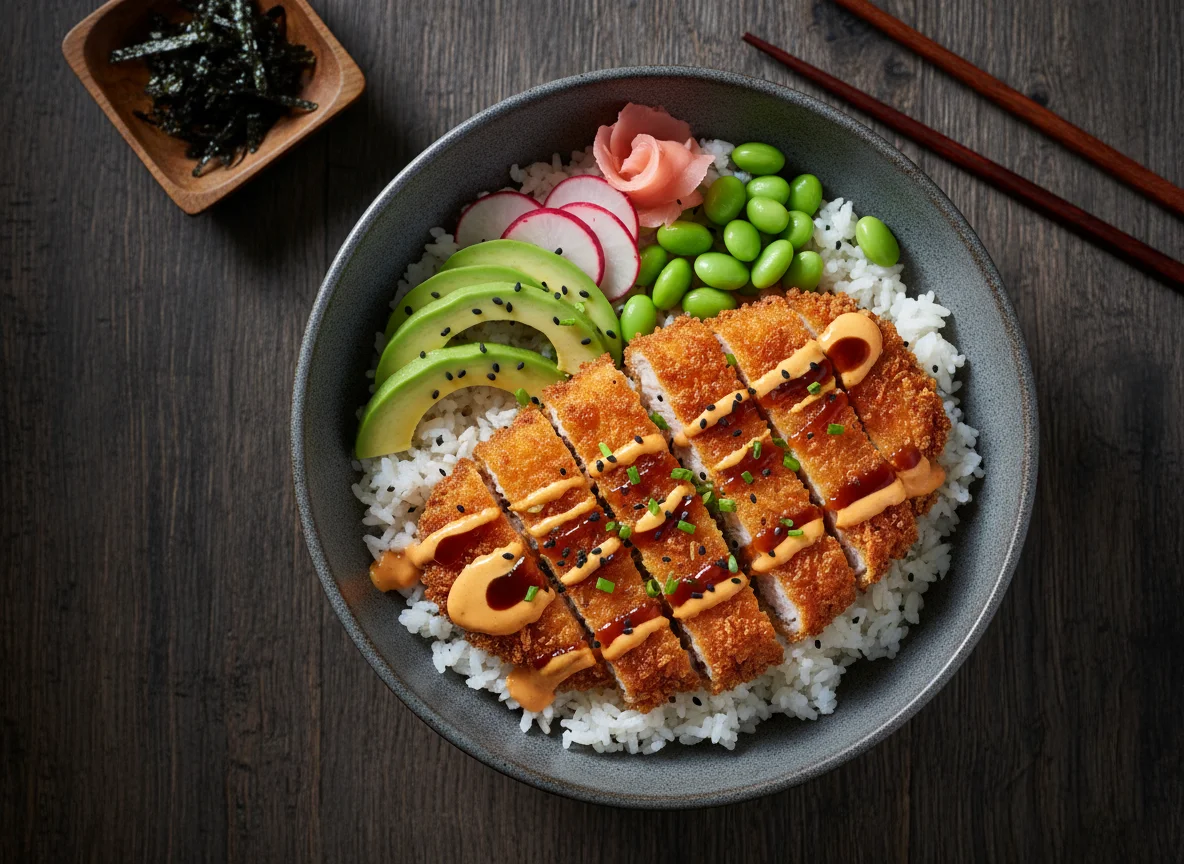
Japanese Katsu Bowls are the kind of meal that wraps you in a warm, savory hug the moment you take that first bite. Hey there! If you’re anything like me, you didn’t grow up in a kitchen full of Michelin stars, but you definitely know the power of a good home-cooked dinner.
Here at HomemadeBlog, I believe that cooking shouldn’t be about fancy credentials; it should be about the smell of onions simmering and the joy of passing plates around the table. I’m Yous, just a regular home cook who loves sharing recipes that make your house feel like a home. Today, we are diving into a dish that is close to my heart and perfect for anyone craving simplicity and flavor.
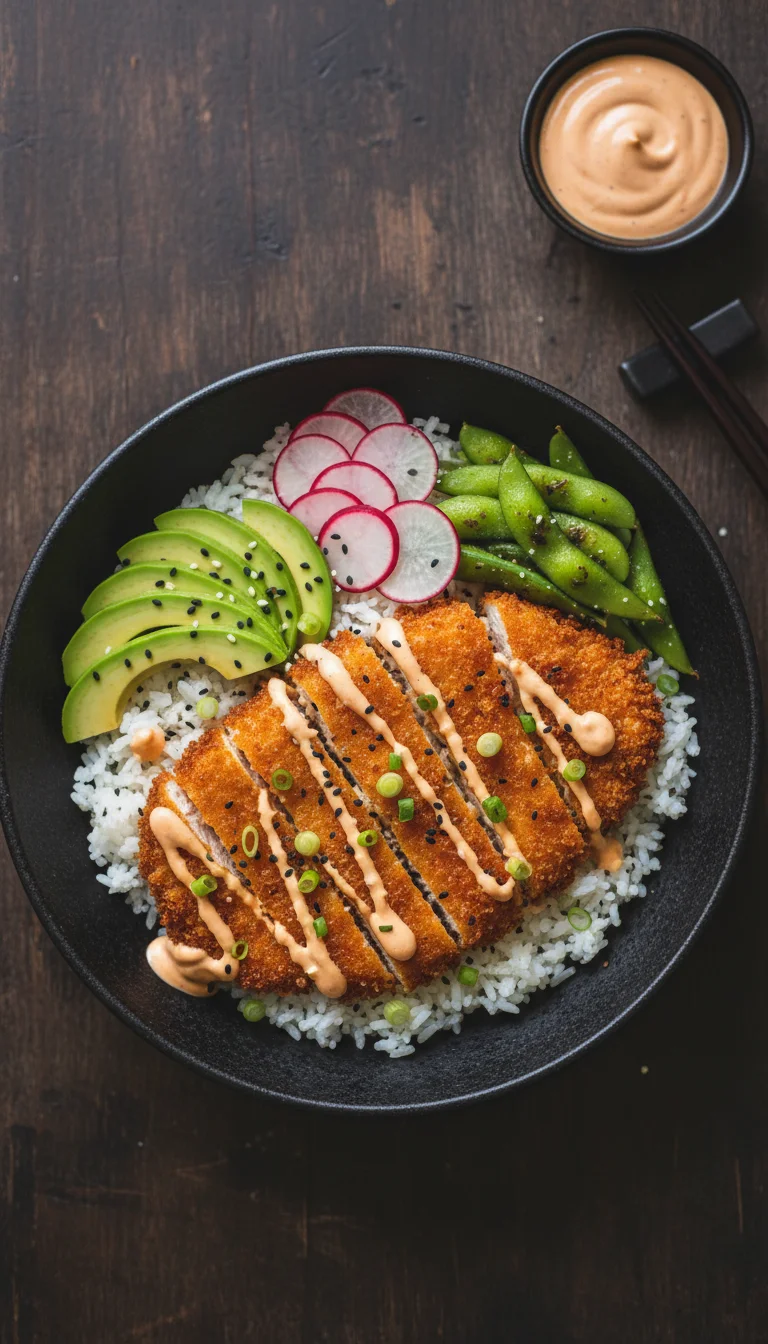
Key Takeaways
- Comfort in a Bowl: Learn why the combination of crispy meat, fluffy eggs, and rice makes this the ultimate soul food.
- The Crunch Factor: Discover how to use Panko breadcrumbs correctly for that restaurant-quality golden texture.
- Sauce Mastery: Simple ratios to balance the sweet and savory dashi broth that defines the dish.
- Meat Selection: Tips on choosing affordable cuts that stay tender without needing professional tools.
- Leftover Magic: Creative ways to reheat and repurpose your ingredients for a second delicious meal.
Why is the Japanese katsu bowl considered the ultimate comfort food?
The Emotional Connection to Simplicity
There is something incredibly grounding about making Japanese Katsu Bowls after a long, chaotic day. For me, comfort food isn’t just about calories; it’s about the feeling of safety and warmth it brings to the family. Just like a hearty bowl of Asian Ground Beef Noodles, this dish relies on humble ingredients coming together to create something greater than the sum of its parts. The ritual of breading the meat and simmering the broth is almost therapeutic, reminding us that great food doesn’t need to be complicated.
A Symphony of Textures
One of the main reasons I obsess over Japanese Katsu Bowls is the incredible contrast in every spoonful. You have the steaming hot rice at the bottom, soaking up the savory juices, topped with a crispy pork cutlet that stays crunchy even when nestled in the egg mixture. It’s a similar satisfaction to digging into a Korean Ground Beef Bowl, where the textures play just as big a role as the flavors. That crunch followed by the soft, fluffy egg is pure magic.
Feeding the Soul and the Stomach
When I place Japanese Katsu Bowls on the table, the room instantly goes quiet as everyone digs in. It is filling in a way that feels wholesome, not heavy. It reminds me of the simple joy of sharing a meal, whether it’s with your partner, your kids, or even just treating yourself. It’s accessible, unpretentious, and deeply satisfying—everything I want my cooking to be.
How do you achieve the perfect golden-brown crunch using panko?
Choosing the Right Breadcrumbs
If you want authentic Japanese Katsu Bowls, you absolutely cannot swap Panko for regular breadcrumbs. Panko flakes are larger and airier, which means they absorb less oil and stay crispier for longer. I learned this the hard way early on in my cooking journey! It’s the same principle I use when making Crispy Chicken Wonton Tacos; the texture of the outer layer makes or breaks the dish.
The Flour-Egg-Panko Station
Setting up your station is key to a stress-free experience when preparing Japanese Katsu Bowls. I like to line up three shallow dishes: one for flour, one for beaten eggs, and one for the Panko. Press the meat firmly into the Panko to ensure a thick, even coating. Don’t be shy here—you want those crumbs to really stick so they don’t fall off in the pan. It’s a messy process, but getting your hands a little dirty is part of the fun of home cooking.
Frying Temperature Matters
To get that perfect golden color on your Japanese Katsu Bowls, your oil needs to be hot but not smoking—around 350°F is the sweet spot. If the oil is too cold, the breadcrumbs will get soggy; too hot, and they’ll burn before the meat is cooked. I listen for a gentle sizzle rather than a violent roar when the meat hits the pan. Watching it turn that beautiful amber color is one of my favorite sights in the kitchen.
“Cooking is about the sights, the smells, and the sounds. The sizzle of panko hitting the oil is the sound of a good meal in the making.”
What is the secret to balancing the sweet and savory katsudon sauce?
Understanding the Dashi Base
The soul of Japanese Katsu Bowls lies in the simmering sauce, which is typically a dashi-based broth. Dashi adds that quintessential umami depth that water or plain chicken stock just can’t replicate. If you want to get really specific with the recipe, you can check out my guide on Japanese Katsu Bowls with Tonkatsu Sauce for exact measurements. It connects all the elements, soaking into the rice and flavoring the eggs perfectly.
The Soy and Mirin Ratio
Balancing the salty soy sauce with the sweet mirin is what gives Japanese Katsu Bowls their addictive flavor profile. I usually aim for a balance that leans slightly savory but has enough sweetness to cut through the richness of the fried meat. It’s a delicate dance, similar to the flavor balance required in Cantonese Chow Mein, where soy sauce plays a starring role. Taste as you go—your palate is your best tool.
Onions as a Natural Sweetener
Don’t underestimate the power of sliced onions in your Japanese Katsu Bowls. I like to simmer the onions in the sauce until they are translucent and soft before adding the meat. They release a natural sweetness that rounds out the sharp edges of the soy sauce. It’s a simple step that adds a layer of home-cooked warmth you just can’t get from a bottle.
Which cut of meat should you choose for the most tender results?
Pork Loin vs. Tenderloin
Traditionally, Japanese Katsu Bowls are made with pork cutlets. You can choose between a fattier loin (rosu) or a leaner tenderloin (hire). I personally love the loin because that little rim of fat renders down and adds so much flavor, similar to the richness you’d expect in a good Chinese BBQ beef. However, if you prefer something softer and leaner, the tenderloin is a fantastic choice that melts in your mouth.
The Art of Pounding the Meat
Regardless of the cut you choose for your Japanese Katsu Bowls, pounding the meat is non-negotiable. I don’t use any fancy equipment—just a heavy rolling pin or the bottom of a heavy jar works fine. This tenderizes the muscle fibers and ensures the cutlet cooks evenly and quickly. It’s a great way to release a little stress after a long day, too!
Chicken as a Delicious Alternative
If you aren’t a fan of pork, you can absolutely make Japanese Katsu Bowls with chicken breast or thighs. The preparation is exactly the same. I often serve the chicken version with a fresh side like an Asian Cucumber Salad to cut through the richness. The versatility of this dish is why it stays on my weekly rotation.
How can you transform leftovers into a gourmet restaurant-style meal?
Reheating Without the Sog
Leftover Japanese Katsu Bowls can be tricky because the breading loses its crunch. My trick is to separate the toppings from the rice if possible, or simply reheat the cutlet in an air fryer or toaster oven to revive that texture. Never microwave the fried meat if you can help it! It’s worth the extra five minutes to bring that crunch back to life.
Repurposing into Sandwiches
If you have extra cutlets but no more rice, forget the Japanese Katsu Bowls and make a Katsu Sando (sandwich). Place the reheated crispy pork between two slices of soft white bread with some shredded cabbage and sauce. It’s a totally different meal that feels just as gourmet. It’s a great lunch option, much like packing a Spicy Salmon Sushi Bake Recipe for work—simple, tasty, and the envy of the breakroom.
Adding Fresh Toppings for a New Spin
Sometimes, all your leftover Japanese Katsu Bowls need is a fresh garnish to feel new again. I love adding a generous pile of pickled ginger or fresh scallions to brighten it up. You could even pair the leftovers with a quick Asian Cucumber Salad TikTok Recipe for a crunchy, refreshing contrast. It ensures that no food goes to waste, which is a huge priority in my kitchen—and good for the budget too!
For more history on the origins of the rice bowl style known as Donburi, it is fascinating to see how this humble dish has evolved over centuries.
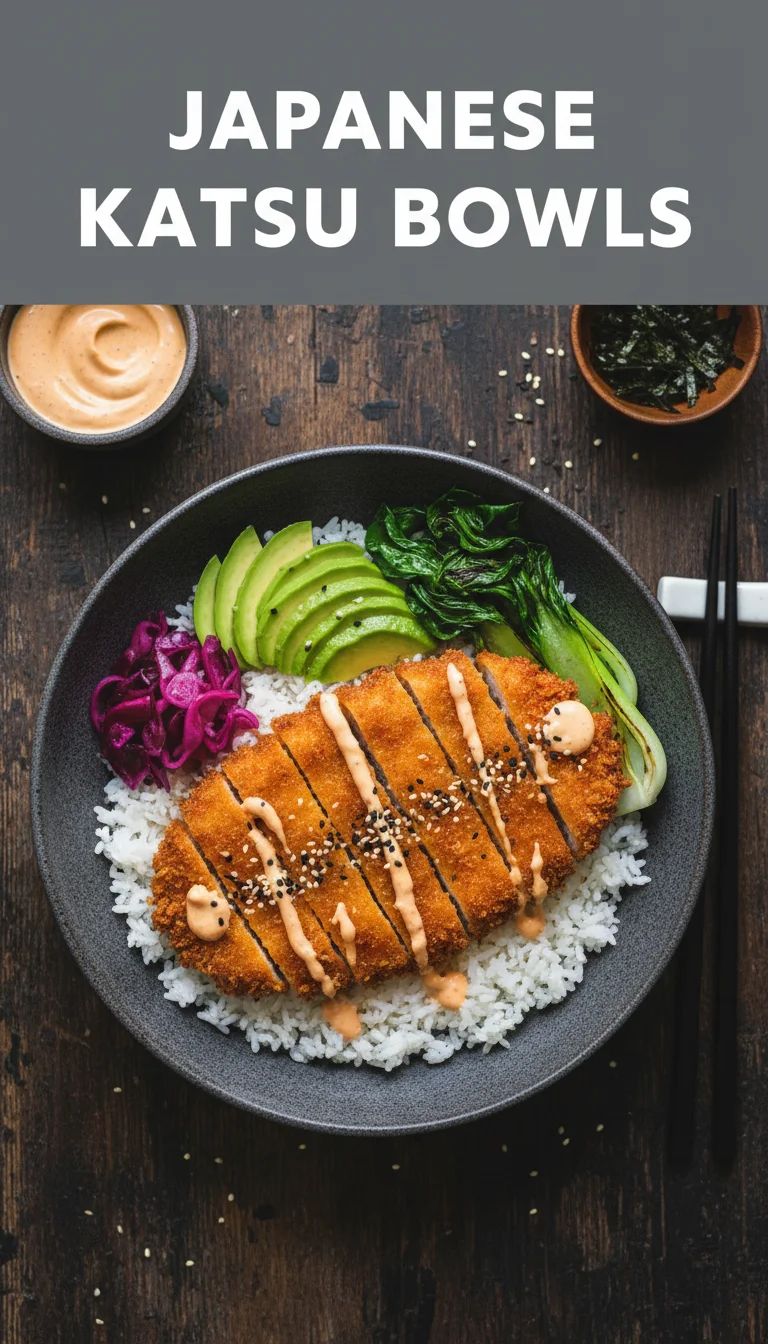
Japanese Katsu Bowls
- Prep Time: 20 minutes
- Cook Time: 15 minutes
- Total Time: 35 minutes
- Yield: 2 servings 1x
- Category: Main Course
- Method: Frying
- Cuisine: Japanese
- Diet: Pork-based, can be adapted for chicken
Description
A warm and savory Japanese comfort food featuring crispy pork cutlets, fluffy eggs, and steamed rice topped with a flavorful dashi broth.
Ingredients
- 2 pork cutlets
- 1 cup Panko breadcrumbs
- 1/2 cup all-purpose flour
- 2 eggs, beaten
- 2 cups cooked rice
- 1 onion, sliced
- 1/4 cup soy sauce
- 2 tablespoons mirin
- 4 cups dashi broth
- Vegetable oil for frying
- Optional: pickled ginger, scallions for garnish
Instructions
- Prepare a breading station with flour, beaten eggs, and Panko breadcrumbs.
- Pound the pork cutlets to tenderize, then coat each cutlet in flour, dip in eggs, and press into Panko.
- Heat oil in a pan to 350°F and fry the cutlets until golden brown and cooked through.
- In a separate pot, sauté onions until translucent, then add dashi broth, soy sauce, and mirin.
- Simmer the sauce before adding the fried cutlets and beaten eggs to create a creamy topping.
- Serve the cutlets over a bed of cooked rice and drizzle with the sauce. Garnish with pickled ginger and scallions if desired.
Notes
For the best texture, avoid using regular breadcrumbs; Panko is essential for a crispy coating.
Nutrition
- Serving Size: 1 bowl
- Calories: 550
- Sugar: 6g
- Sodium: 800mg
- Fat: 22g
- Saturated Fat: 5g
- Unsaturated Fat: 15g
- Trans Fat: 0g
- Carbohydrates: 70g
- Fiber: 2g
- Protein: 30g
- Cholesterol: 210mg
Leave a Reply