
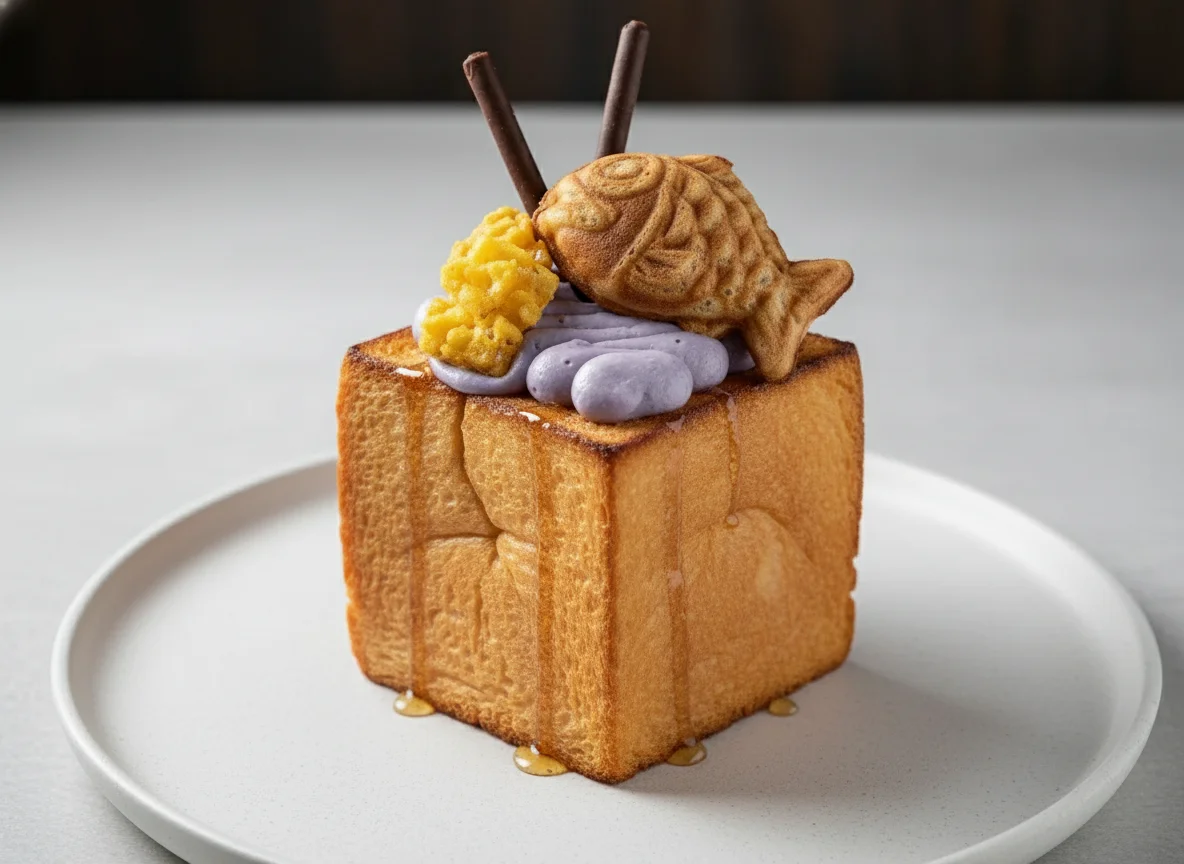
Coconut chantilly. Shokupan with honey glaze is the kind of treat that stops you in your tracks and demands your full attention. Hey there! I’m Chef Yous, and welcome to Homemade Blog, where we believe that the best smells in the world come from your own oven, not a fancy bakery.
I didn’t go to culinary school, but I’ve spent years covered in flour, learning that the secret to great food is simply love and patience. Even my dog sits by the oven door when I make this, waiting for that sweet, yeasty aroma to fill the house. There is something truly special about the way the Coconut chantilly. Shokupan with honey glaze comes together to create a bite of pure comfort.
Key Takeaways
- Texture is King: The contrast between the fluffy bread and the creamy topping is what defines a perfect Coconut chantilly. Shokupan with honey glaze.
- Temperature Matters: Glazing your bread at the exact right moment ensures that your Coconut chantilly. Shokupan with honey glaze stays shiny without getting soggy.
- Quality Ingredients: Using full-fat coconut milk is non-negotiable for the stability of the cream in your Coconut chantilly. Shokupan with honey glaze.
- Patience Pays Off: The Tangzhong method adds time, but it is the secret weapon for the longevity of your Coconut chantilly. Shokupan with honey glaze.
What makes the combination of coconut chantilly and honey-glazed shokupan so irresistible?
The magic of contrasting textures
There is a reason why we crave foods that offer a bit of everything in one bite. When you sink your teeth into a slice of Coconut chantilly. Shokupan with honey glaze, you get this incredible mix of airy bread and velvety cream. It reminds me of the delicate texture of a Strawberry Matcha Cloud, where softness is the main event. That initial crunch of the glaze followed by the pillowy interior makes the Coconut chantilly. Shokupan with honey glaze an absolute masterpiece of texture.
A symphony of subtle sweetness
I love desserts that don’t just hit you with sugar but layer the flavors gently. The honey glaze provides a floral high note, while the coconut cream adds a mellow, tropical depth to the Coconut chantilly. Shokupan with honey glaze. It’s similar to the balanced sweetness you find in a Hummingbird Cake, where fruit and spice dance together. This balance ensures that you can eat a whole slice of Coconut chantilly. Shokupan with honey glaze without feeling overwhelmed.
Why this specific pairing works
Japanese milk bread is famous for its milky, neutral base, which is the perfect canvas for bold toppings. By adding a tropical twist, the Coconut chantilly. Shokupan with honey glaze elevates a staple recipe into something exotic yet comforting. It bridges the gap between a morning toast and a decadent dessert. Every time I serve Coconut chantilly. Shokupan with honey glaze, friends ask me how two simple components can taste so complex together.
How can you achieve the perfect pillowy texture in your shokupan every single time?
Mastering the Tangzhong method
If you want your bread to stay soft for days, you have to embrace the Tangzhong method. This ancient Asian technique involves cooking a small portion of flour and milk into a paste before adding it to your dough, which is essential for a true Coconut chantilly. Shokupan with honey glaze. It locks in moisture just like the techniques used in a moist Pistachio Raspberry Cake. Without this step, your Coconut chantilly. Shokupan with honey glaze might dry out too fast.
The importance of yeast activation
I treat my yeast like a living pet; it needs warmth and food to thrive. If your milk is too hot, you’ll kill it, and if it’s too cold, it won’t wake up to help your Coconut chantilly. Shokupan with honey glaze rise. I always look for that frothy, bubbling surface that smells earthy and alive. That active bubbling is the heartbeat of a successful Coconut chantilly. Shokupan with honey glaze.
Kneading for the perfect windowpane
You cannot rush the kneading process if you want those distinct, feathery layers. I like to put on some music and just get into the rhythm until I can stretch the dough thin enough to see light through it, ensuring a perfect Coconut chantilly. Shokupan with honey glaze. This structure is what holds up the heavy toppings later. A strong gluten network is the backbone of any artisan loaf, especially when making Coconut chantilly. Shokupan with honey glaze.
“Bread making is about listening to the dough. It tells you when it’s ready, you just have to feel it.”
Why is coconut chantilly the ultimate game-changer for traditional Japanese milk bread?
Lighter than traditional dairy
Standard heavy cream can sometimes feel a bit too rich or greasy on the palate. Whipped coconut cream offers a lighter, cleaner mouthfeel that prevents the Coconut chantilly. Shokupan with honey glaze from feeling heavy. It’s a refreshing change, much like the zestiness in a High Lemon Blueberry Pound Cake. This lightness allows you to pile it high on your Coconut chantilly. Shokupan with honey glaze without guilt.
Tropical notes meeting milky dough
The slight nuttiness of the coconut pairs beautifully with the buttery scent of the bread. It brings a vacation vibe to your kitchen, transforming the Coconut chantilly. Shokupan with honey glaze into a tropical escape. I find that this flavor profile surprises people who expect plain whipped cream. It is the secret soul of the Coconut chantilly. Shokupan with honey glaze.
Stability tips for whipped coconut cream
One tricky thing about coconut cream is keeping it stiff in a warm kitchen. I always chill my bowl and beaters beforehand to ensure the topping for my Coconut chantilly. Shokupan with honey glaze holds its shape. You want it to look like a fluffy cloud, not a melting puddle. A stable chantilly is crucial for the visual appeal of your Coconut chantilly. Shokupan with honey glaze.
Which secret techniques ensure your honey glaze achieves a brilliant, non-sticky shine?
Timing the glaze application
You have to brush the glaze on while the bread is still warm, but not piping hot. This allows the Coconut chantilly. Shokupan with honey glaze to absorb some sweetness while leaving a glossy shell on top. It’s a delicate process, similar to the care needed for a Honey & Lavender “Burn-Away” cake. If you wait until it’s cold, the glaze will just sit on top of the Coconut chantilly. Shokupan with honey glaze and look dull.
Balancing honey with butter
Pure honey can be too sticky, making the bread hard to handle. I mix in a little melted butter to create a glaze that is smooth and manageable for the Coconut chantilly. Shokupan with honey glaze. This mixture gives it that professional sheen you see in bakery windows. It’s the finishing touch that makes the Coconut chantilly. Shokupan with honey glaze look as good as it tastes.
Cooling down without losing the gloss
Once glazed, let the bread cool on a wire rack to prevent the bottom from getting soggy. Air circulation is key to maintaining the structural integrity of your Coconut chantilly. Shokupan with honey glaze. If you cover it too soon, the steam will destroy that beautiful shine. A properly cooled Coconut chantilly. Shokupan with honey glaze will glisten under the kitchen lights.
What are the most creative ways to serve this decadent masterpiece to impress your guests?
Toasting for a warm crunch
My absolute favorite way to eat this is to slice a thick piece and toast it lightly before adding the cold cream. The temperature contrast in the Coconut chantilly. Shokupan with honey glaze is mind-blowing. It brings out the aroma of the honey and makes the bread crisp. Serving a warm Coconut chantilly. Shokupan with honey glaze is the ultimate comfort move.
Pairing with floral teas
Because the dessert is rich, I like to serve it with something aromatic like a rose or cardamom tea. The floral notes complement the honey in the Coconut chantilly. Shokupan with honey glaze beautifully, reminiscent of a South Asian Rose & Cardamom treat. It turns a simple snack into an elegant afternoon tea experience. Your guests will feel pampered with this pairing for the Coconut chantilly. Shokupan with honey glaze.
Plating with fresh berries
To cut through the richness, throw on some tart blackberries or raspberries. The pop of color makes the Coconut chantilly. Shokupan with honey glaze look like a Vintage Heart Cake designed for a celebration. I often look for inspiration from recipes like Blackberry & Earl Grey to find the best fruit pairings. A colorful plate makes the Coconut chantilly. Shokupan with honey glaze unforgettable.
If you are looking to dive deeper into bread science, checking out guides on Artisan baking techniques can really help you understand the chemistry behind the rise. Understanding the “why” helps you perfect your Coconut chantilly. Shokupan with honey glaze.
Coconut Chantilly Shokupan with Honey Glaze
- Prep Time: 15 minutes
- Cook Time: 30 minutes
- Total Time: 45 minutes
- Yield: 8 servings 1x
- Category: Dessert
- Method: Baking
- Cuisine: Japanese
- Diet: Vegetarian
Description
A delectable treat combining fluffy Japanese shokupan bread with light coconut chantilly and a sweet honey glaze.
Ingredients
- 2 cups all-purpose flour
- 1/2 cup full-fat coconut milk
- 1/4 cup sugar
- 1/4 cup butter, melted
- 1 packet active dry yeast
- 1/2 cup warm water
- 1/2 teaspoon salt
- 1 cup whipped coconut cream
- 1/4 cup honey
Instructions
- Activate the yeast by mixing it with warm water and sugar, allowing it to bubble for 5 minutes.
- In a mixing bowl, combine flour, salt, milk, and melted butter, then add the activated yeast mixture.
- Knead the dough until it becomes smooth and elastic.
- Cover the dough and let it rise in a warm place until doubled in size, about 1 hour.
- Prepare the Tangzhong by cooking a small portion of flour and milk into a paste, then incorporate it into the bread dough.
- Form the dough into a loaf and let it rise again for 30 minutes.
- Bake at 350°F (175°C) for 25-30 minutes, or until golden brown.
- While the bread is warm, brush on a mixture of melted butter and honey to glaze it.
- Allow the bread to cool on a wire rack before slicing and topping with coconut chantilly.
Notes
Serve toasted for a warm contrast with the cold coconut chantilly.
Nutrition
- Serving Size: 1 slice
- Calories: 320
- Sugar: 14g
- Sodium: 200mg
- Fat: 10g
- Saturated Fat: 4g
- Unsaturated Fat: 6g
- Trans Fat: 0g
- Carbohydrates: 50g
- Fiber: 2g
- Protein: 6g
- Cholesterol: 20mg

Leave a Reply