
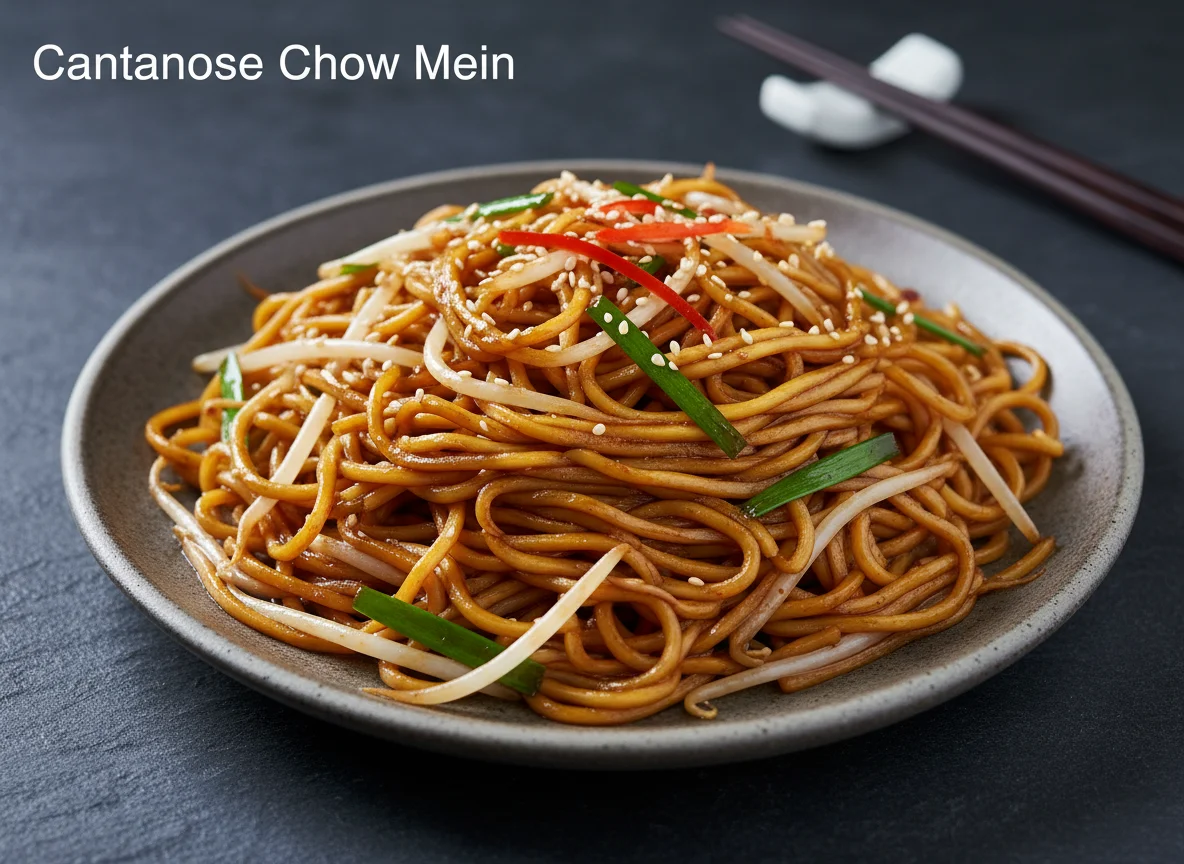
Cantonese Chow Mein is the ultimate comfort food that brings a satisfying crunch to your dinner table. Hey there! I’m Yous, and welcome to my kitchen. If you’ve been following my journey here at HomemadeBlog, you know I didn’t go to culinary school, and I definitely didn’t grow up in a kitchen full of Michelin stars.
I’m just a home cook who loves the smell of food bubbling on the stove and the joy of passing plates around the table to family and friends. While I love experimenting with all kinds of flavors, mastering a proper Cantonese Chow Mein has been one of my favorite adventures because it transforms simple ingredients into something spectacular.
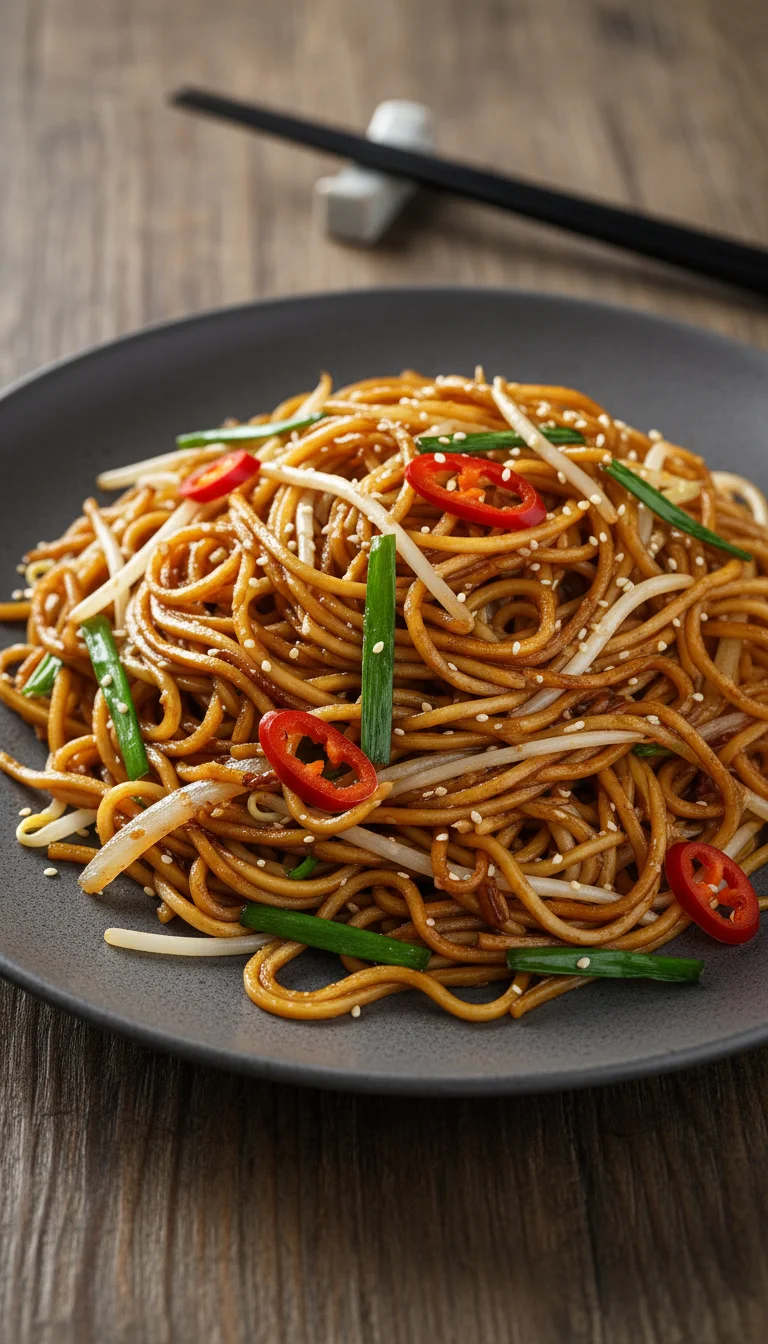
Key Takeaways
- Texture is King: The defining feature of this dish is the “two-sided yellow” noodle cake that is crispy on the outside and tender inside.
- Sauce Consistency: A proper gravy is essential to soften the crispy noodles just enough while you eat.
- Heat Control: You don’t need a commercial burner, but preheating your pan is vital for success.
- Versatility: You can use almost any protein or vegetable you have in the fridge.
What makes Cantonese Chow Mein different from other stir-fried noodles?
The Signature Crispy Noodle Base
Unlike a soft Lo Mein where everything is tossed together in the wok, Cantonese Chow Mein is famous for its distinct texture. The noodles are pan-fried into a crispy cake before the sauce is even added. When I first tried making this, I was surprised that we aren’t just stirring noodles around; we are essentially frying a pancake of noodles! This creates a delightful bed for the toppings, ensuring that every bite of Cantonese Chow Mein has a satisfying crunch that you just don’t get with other noodle dishes.
The Sauce Sits on Top
Another huge difference is how the sauce is applied to the Cantonese Chow Mein. In most stir-fries, like my Asian Ground Beef Noodles, the noodles are tossed directly in the sauce to absorb the flavor. However, with Cantonese Chow Mein, the savory gravy is poured over the crispy noodles right before serving. This technique keeps the noodles crunchy for as long as possible, creating a beautiful contrast as the gravy slowly softens the strands underneath.
A Textural Adventure
Eating Cantonese Chow Mein is really an experience in contrasting textures. You get the snap of the crispy outer noodles, the chewiness of the inner noodles, and the tenderness of the meat and vegetables. It reminds me a bit of the texture play in my Crispy Chicken Wonton Tacos, where the crunch is the star of the show. If you serve Cantonese Chow Mein at a dinner party, it always impresses because it feels much more sophisticated than a standard takeout box.
How do you achieve the perfect crispy texture for the noodles?
Choosing the Right Noodle
To get that authentic Cantonese Chow Mein snap, you really need to start with thin, fresh egg noodles, often labeled as “Hong Kong style” pan-fry noodles. If you use standard pasta or thick udon, you won’t get that bird’s-nest crispiness we are aiming for. I’ve tried this with various types, and the thin egg noodles are the only ones that crisp up correctly for Cantonese Chow Mein without becoming hard or getting stuck in your teeth.
The Par-Boil and Dry Technique
Before the noodles hit the oil, you have to par-boil them briefly and then—this is the secret—let them dry out completely. If your noodles are wet, they will steam instead of fry, ruining your Cantonese Chow Mein. I usually spread them out on a baking sheet and let them air dry for a bit. It’s a simple step, but it makes the difference between a soggy mess and a restaurant-quality Cantonese Chow Mein.
Patience with the Pan-Fry
When you are frying the noodle cake for Cantonese Chow Mein, you have to resist the urge to move it. Treat it like a hash brown; let it sit in the oil until it forms a golden-brown crust. If you flip it too early, the cake breaks apart. I learned this the hard way! Achieving that golden color is what gives Cantonese Chow Mein its signature look and nutty flavor.
Which essential ingredients are hidden in the classic savory sauce?
The Holy Trinity of Sauces
The gravy for Cantonese Chow Mein relies heavily on oyster sauce, soy sauce, and a splash of dark soy sauce for color. It’s a savory, umami-packed bomb that brings the whole dish together. Just like when I make Chinese BBQ beef, the quality of your soy sauce matters. For a truly rich Cantonese Chow Mein, don’t skimp on the oyster sauce—it provides that deep, briny sweetness that mimics the restaurant taste.
The Magic of Cornstarch Slurry
You cannot have Cantonese Chow Mein without a thick, glossy sauce, and that comes from a cornstarch slurry. You mix cornstarch with cold water and pour it into your bubbling broth. Watching the sauce thicken instantly is one of the most satisfying parts of cooking this dish. It ensures the sauce clings to the vegetables and doesn’t just run to the bottom of the plate, which is crucial for a good Cantonese Chow Mein.
Aromatics and Wine
To lift the heavy savory notes, I always add ginger, garlic, and a splash of Shaoxing wine to my Cantonese Chow Mein sauce. The wine adds a floral depth that you can smell the moment it hits the hot pan. It’s similar to the depth of flavor I look for when making a Korean Ground Beef Bowl, where the aromatics really set the tone. Without these aromatics, your Cantonese Chow Mein might taste a bit flat.
Why is high heat or ‘wok hei’ crucial for an authentic taste?
Understanding Wok Hei
“Wok hei” translates to “breath of the wok,” and it’s that elusive smoky flavor you find in good Cantonese Chow Mein. It comes from the oil and ingredients hitting extreme heat, slightly singing the food. While I don’t have a jet-engine burner in my home kitchen, I know that getting your pan ripping hot is the first step to mimicking this flavor in your Cantonese Chow Mein.
Replicating Heat at Home
To get close to that wok hei for your Cantonese Chow Mein, use a cast-iron skillet or a carbon steel wok and let it preheat until it’s smoking slightly. Don’t overcrowd the pan! If you put too many veggies in at once, the temperature drops, and you lose that sear. I cook in batches to ensure my Cantonese Chow Mein toppings get that nice char rather than just boiling in their own juices.
The Smoky Aroma
When you achieve even a little bit of wok hei, the aroma of the Cantonese Chow Mein changes completely. It smells like a bustling night market. It’s that same mouth-watering scent you get with Japanese Katsu Bowls when the hot cutlet hits the rice, but smokier. That scent is half the enjoyment of eating Cantonese Chow Mein.
> “Cooking is about emotion. It’s about the smell of the wok and the sound of the sizzle. That’s what makes a house a home.”
What are the best protein and vegetable combinations for a balanced meal?
Classic Protein Choices
Traditionally, Cantonese Chow Mein is served with Char Siu (BBQ pork), chicken, beef, or seafood like shrimp and squid. I love using leftover rotisserie chicken or shrimp because they cook fast. If you are a fan of seafood, you might appreciate the flavors here just as much as my Spicy Salmon Sushi Bake Recipe. The versatility means you can customize your Cantonese Chow Mein to whatever your family prefers.
Crunchy Vegetables are a Must
You need veggies that hold their crunch to stand up to the rich gravy of the Cantonese Chow Mein. Bok choy, gai lan (Chinese broccoli), carrots, and snap peas are my favorites. I often serve a side of Asian Cucumber Salad or the viral Asian Cucumber Salad TikTok Recipe to add even more freshness to the meal. The greens not only add nutrition but also make the Cantonese Chow Mein look vibrant and appetizing.
Balancing the Plate
Since the noodles are fried, Cantonese Chow Mein can be a bit heavy, so loading it up with proteins and veggies creates a balanced meal. It’s a “one-plate wonder” that feeds the soul. Even my pup gives me the puppy eyes when he smells the meats cooking (though I keep the onions and garlic away from him!). Whether you prefer the rich sauce of Japanese Katsu Bowls with Tonkatsu Sauce or the stir-fry style, a well-balanced Cantonese Chow Mein is a winner every time. For more inspiration on balancing flavors, check out Wikipedia’s guide to Cantonese cuisine.
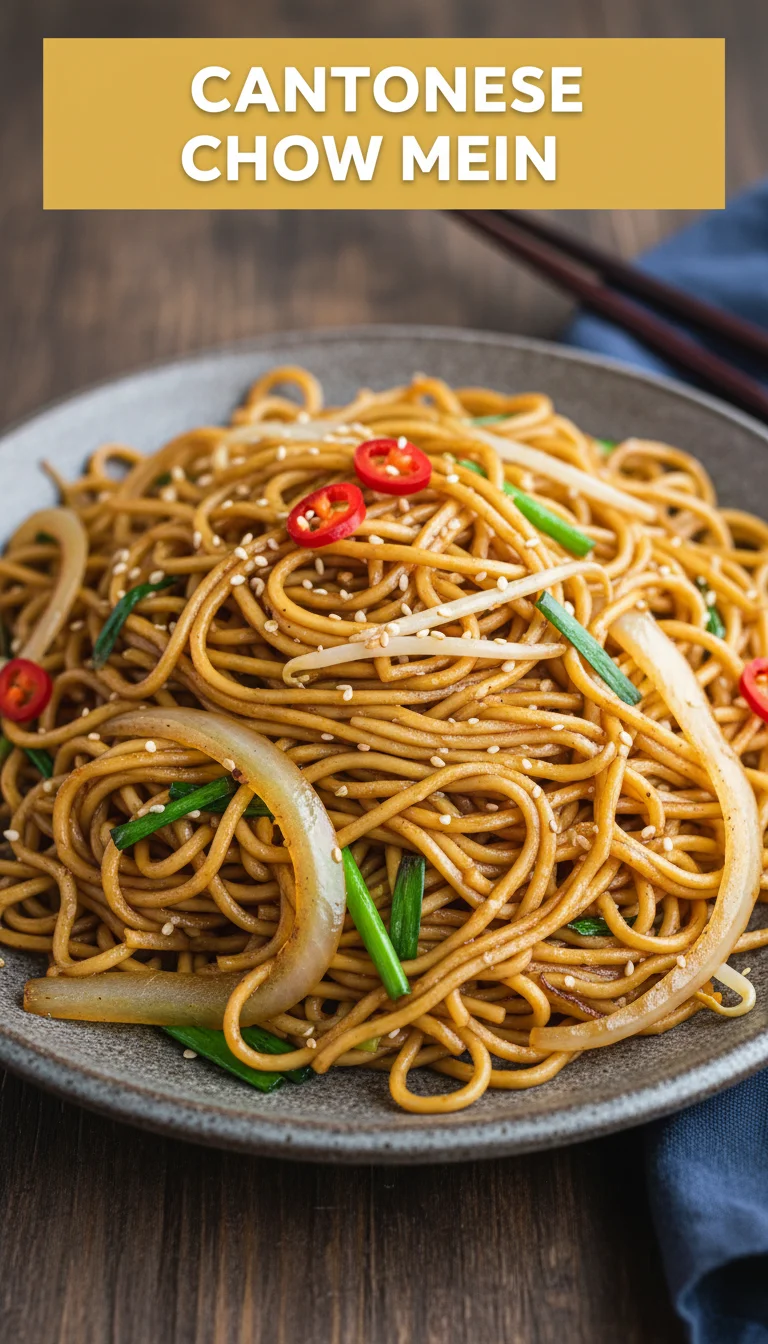
Cantonese Chow Mein
- Prep Time: 15 minutes
- Cook Time: 20 minutes
- Total Time: 35 minutes
- Yield: 4 servings
- Category: Main Course
- Method: Pan-frying
- Cuisine: Chinese
- Diet: Omnivore
Description
Cantonese Chow Mein is the ultimate comfort food featuring crispy noodle cakes topped with a savory glaze, making it a delightful dining experience.
Ingredients
- Thin fresh egg noodles (Hong Kong style)
- Oyster sauce
- Soy sauce
- Dark soy sauce
- Cornstarch
- Ginger, minced
- Garlic, minced
- Shaoxing wine
- Chicken, shrimp, or pork
- Bok choy
- Carrots, sliced
- Snap peas
- Gai lan (Chinese broccoli)
- Cooking oil
Instructions
- Par-boil the egg noodles for a few minutes and let them dry completely on a baking sheet.
- Heat oil in a preheated cast-iron skillet or carbon steel wok until smoking.
- Add the dried noodles to the pan and fry until a golden-brown crust forms, taking care not to move them too much.
- In a separate bowl, combine the oyster sauce, soy sauces, ginger, garlic, and Shaoxing wine, then set aside.
- Once the noodles are crispy, pour the sauce mixture over the noodles to coat them.
- Add your choice of protein and vegetables, sautéing until everything is cooked through and well combined.
- Serve immediately, allowing the crispy noodles to hold their texture while enjoying the rich flavors.
Notes
For the best texture, ensure noodles are completely dry before frying and resist moving them during the cooking process to maintain their structure.
Nutrition
- Serving Size: 1 serving
- Calories: 500
- Sugar: 6g
- Sodium: 600mg
- Fat: 20g
- Saturated Fat: 5g
- Unsaturated Fat: 10g
- Trans Fat: 0g
- Carbohydrates: 60g
- Fiber: 4g
- Protein: 25g
- Cholesterol: 50mg
Leave a Reply